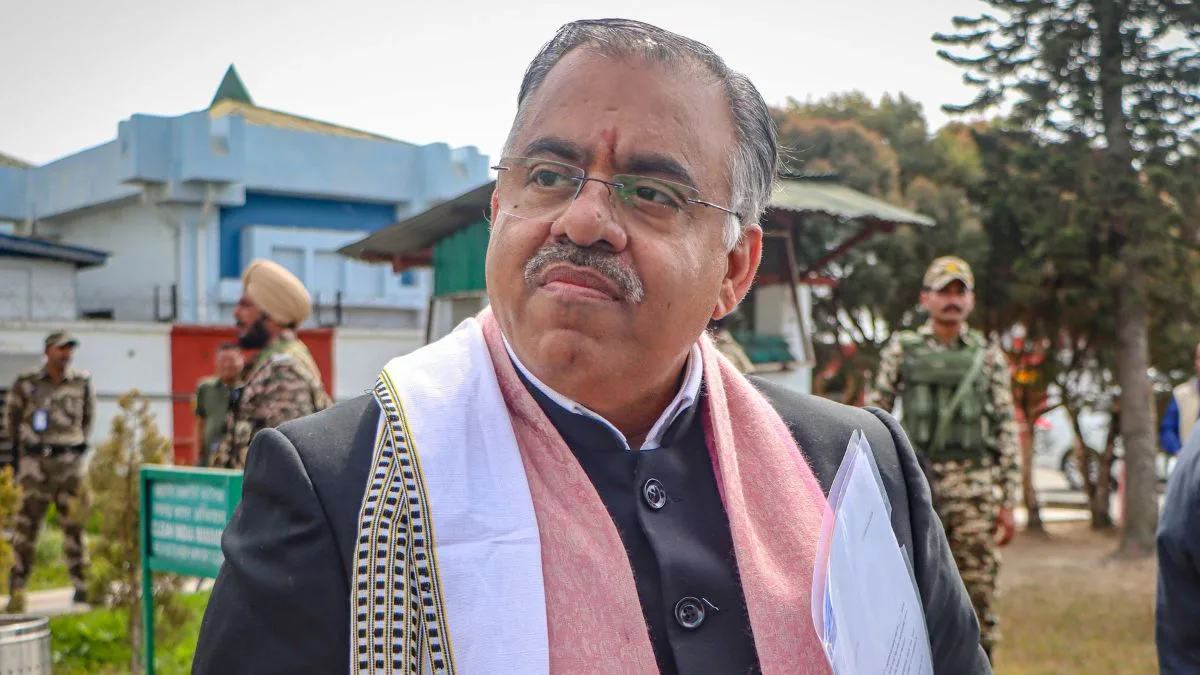
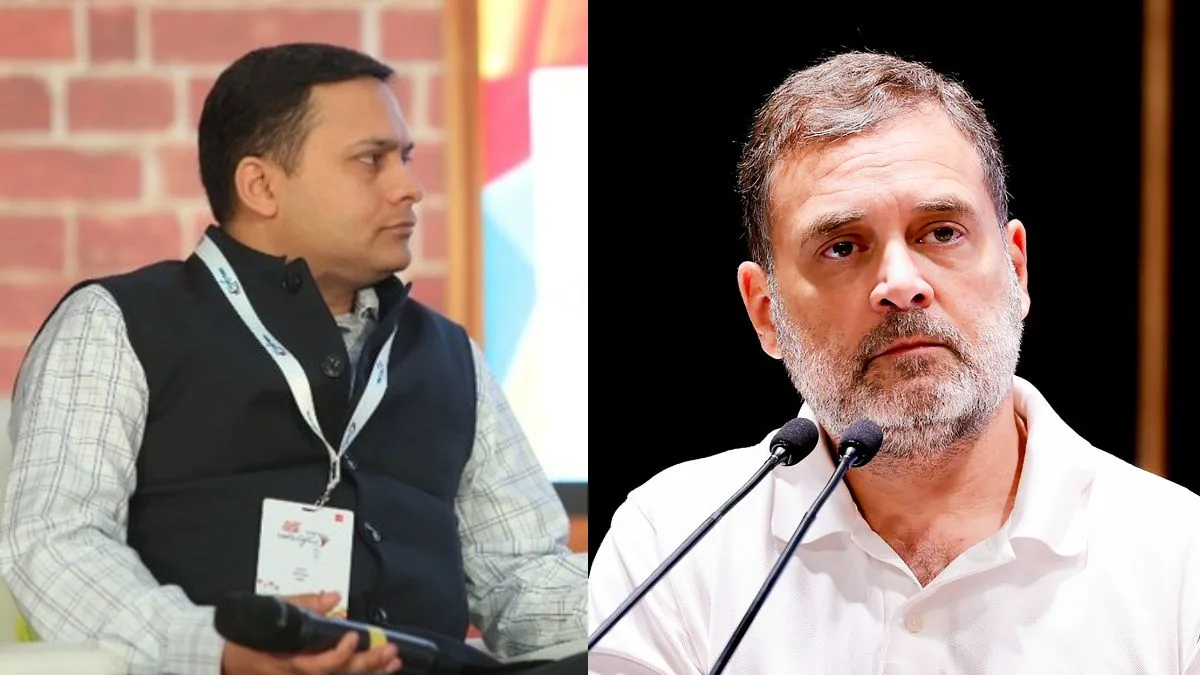
Amitabh Thakur flags security lapses during Rahul Gandhi’s Lucknow visit
Rahul Gandhi had come to Lucknow on Tuesday to appear in the MP/MLA court to seek bail in a defamation case.
Presiding over the meeting, Chamber President Paresh Gattani stated that the continued requirement of e-way bills—despite the mandatory adoption of e-invoicing—adds an unnecessary layer of duplication and operational strain on businesses, particularly those engaged in local goods movement.





Photo: SNS
In a move underscoring the growing burden of dual compliance under the Goods and Services Tax (GST) regime, the Federation of Jharkhand Chamber of Commerce and Industries (FJCCI) has resolved to take up the issue of e-way bill exemption for intra-city transport in cases where e-invoicing is already in place. The decision, made at the Chamber’s executive committee meeting held on Wednesday, aims to build a coordinated multi-state agenda to be formally placed before the GST Council.
Presiding over the meeting, Chamber President Paresh Gattani stated that the continued requirement of e-way bills—despite the mandatory adoption of e-invoicing—adds an unnecessary layer of duplication and operational strain on businesses, particularly those engaged in local goods movement. The committee agreed that a joint representation with trade bodies from neighbouring states will be prepared in advance of the Council’s next sitting.
Advertisement
Rising incidents of theft in agricultural mandis, particularly in Ranchi’s Pandra market, also featured prominently in the meeting. Members flagged the absence of security personnel as a key concern, allowing anti-social elements to target traders with impunity. The Chamber resolved to raise the issue directly with the state agriculture minister, citing growing anxiety among stakeholders and lack of remedial action by the market boards.
Advertisement
Looking outward, the Chamber announced its upcoming international trade delegation to Vietnam, scheduled for 24–30 June. The business mission, comprising 25 members from diverse industry sectors, is expected to explore bilateral trade opportunities and position Jharkhand’s industrial base on a global platform.
Several pressing issues from other districts also drew attention. In Palamu, Chamber members reported that the municipal corporation has begun raising holding tax demands from industrial units already covered under JIADA (Jharkhand Industrial Area Development Authority)—a practice viewed as double taxation. Meanwhile, from Pakur came reports of serious disruption in commuter services, with passenger trains halted since the Covid-19 outbreak. Despite the station being included under the Amrit Bharat scheme two years ago, no infrastructure development has taken place, members noted.
Chamber General Secretary Aditya Malhotra assured that the matter would be taken up with senior railway officials, while also backing the need for direct train services from Pakur to Patna and Delhi to ease regional connectivity constraints.
Another concern raised was the continued enforcement of no-entry restrictions on three-wheeled goods carriers in Ranchi, despite prior assurances that the rules would be relaxed once the city’s flyover construction was completed. Responding to executive committee member Sanjay Akhouri’s intervention, the Chamber president agreed to hold talks with the traffic SP.
On a lighter note, the Chamber invited members to attend and support the upcoming Badminton Tournament to be held at Khelgaon Stadium on 22 June. The event is expected to foster camaraderie and raise morale across business fraternities.
The committee also resolved to defer its planned Ordinary General Meeting (OGM), scheduled for 19 June, citing technical constraints. Among those present were Vice Presidents Rahul Sabu and Jyoti Kumari, Treasurer Rohit Agarwal, Joint Secretary Vikas Vijayvargiya, Regional Vice Presidents Amit Sahu and Pradeep Agarwal, and several past presidents and senior members.
With a slate of issues ranging from tax reform to infrastructure gaps, institutional security to international outreach, the Chamber’s meeting reflected a broadening agenda—rooted in Jharkhand’s realities but increasingly aligned with national policy conversations.
Advertisement